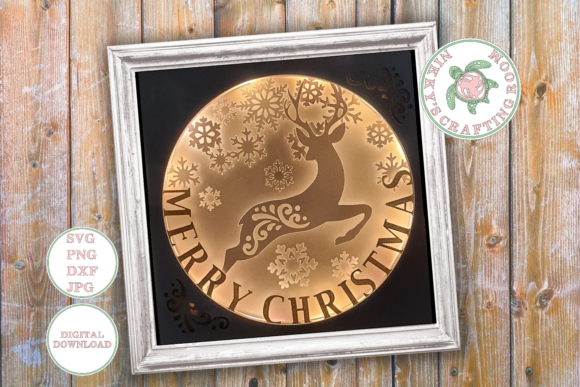
Christmas Stag 3d Shadow Box Review
As a designer who spends more time than I care to admit staring at stitch charts and troubleshooting tension issues, I approach every new embroidery file with a mix of skepticism and curiosity. The market is flooded with generic holiday motifs, so finding a design that actually translates well from screen to fabric is rare. I recently tested the Christmas Stag 3d Shadow Box, and while the concept sounds complex, the execution offers some interesting possibilities for both personal projects and commercial merchandise.
This review isn’t just about whether the design looks pretty in a preview window. It’s about how it behaves when you are actually running it through your machine, how it holds up on different fabrics, and whether it adds enough value to justify the production time. If you are an Etsy seller or a craft business owner looking to expand your holiday lineup, read on for a practical breakdown of what this machine embroidery design brings to the table.
First Impressions and Visual Personality
The moment I opened the files, the first thing that struck me was the structural integrity of the layout. A "Shadow Box" style implies depth, and in embroidery, depth usually means layering. This design leverages that technique effectively. The stag itself has a strong silhouette, which is crucial for recognition, especially when scaled down for smaller items like caps or baby onesies.
Mood-wise, it sits comfortably between rustic elegance and cozy holiday charm. It doesn’t scream "loud Christmas," which makes it versatile. It feels appropriate for a high-end boutique gift or a heartfelt handmade present for a family member. The visual personality is grounded and masculine yet festive, making it a smart choice for targeting demographics that often get overlooked in holiday collections, such as fathers, grandfathers, or partners who prefer subtle aesthetics over traditional red-and-green clutter.
Real-World Application: From Design to Finished Product
I put this embroidery project through its paces on several different substrates to see where it truly shines. Here is how it performed in real-life scenarios:
- Sweatshirt Embroidery: This is perhaps the strongest use case. The layered nature of the 3D SVG concept works beautifully on heavy cotton fleece. The contrast between the textured fabric and the smooth stitches gives the piece a premium feel. It looks particularly striking in navy or charcoal grey, allowing the thread colors to pop without overwhelming the garment.
- Tote Bag Design: Canvas totes are a staple for small shop products. When placed centrally on a natural jute or heavy canvas tote, the stag acts as a focal point. Because the design relies on clear lines rather than tiny, intricate details, it remains legible even on coarse fabrics. It elevates a simple utility bag into a fashionable accessory.
- Personalized Gift Items: I tested this on linen tea towels and aprons. The shadow box effect adds a dimensionality that flat designs lack, making the finished product look more expensive. For a handmade product sold at craft fairs, this extra visual interest can be the deciding factor for a buyer picking it up off the table.
- Baby Embroidery: While the theme is somewhat rugged, scaling it down for a baby blanket or bib creates a charming juxtaposition. However, this requires careful attention to scale, which we will discuss shortly.
Technical Performance and Stitch Behavior
One of the biggest challenges with shadow box styles is managing the transition between layers. In this file, the grouping of elements helps maintain alignment. When I stitched it out, the registration was solid. There was no significant shifting between the background "box" elements and the central stag figure.
The stitch density appears balanced. It is not so dense that the fabric becomes stiff or unmanageable, nor is it so sparse that the backing shows through. This balance is critical for commercial embroidery where durability matters. If you are selling these items, you need them to survive washing without puckering or losing shape. The design seems robust enough for regular use, provided you use the correct stabilizer for your fabric type.
For those using applique design techniques within this frame, the edges held their satin stitch cleanly. There were no excessive jumps or trims that required tedious cleanup, which saves valuable production time. Time is money, after all, especially for digital product sellers or those producing in bulk.
Where Caution Is Required
No design is perfect, and there are specific situations where this Christmas Stag 3d Shadow Box might struggle. Being aware of these limitations will save you from ruined garments and frustrated customers.
- Small Hoop Sizes: If you attempt to stitch this on a very small area, such as a cap front or a small pocket, the details may become muddy. The shadow box effect needs breathing room to work. On tiny surfaces, it might just look like a blob. Always test on scrap fabric first to ensure the minimum size requirements are met.
- Stretchy and Textured Fabrics: While sweatshirts worked well, I found that thin stretchy knits required additional support. Without proper stabilizer, the hoop marks can be visible, and the distortion from the stitching tension can warp the image. Similarly, highly textured fabrics like bouclé wool can hide the finer details of the design.
- Dense Stitch Areas: If you are working with dark fabric, ensure your thread colors have enough contrast. On black or deep navy, lighter threads might get lost if the fill stitch is too light. Conversely, white thread on white fabric can disappear entirely unless you rely solely on texture differences.
- Curved Surfaces: Stitching this on a curved surface like a baseball cap can be tricky. The flat geometry of a shadow box might not follow the curve of the hat naturally, potentially causing distortion at the edges. It is better suited for flat panels or slightly curved items like apron fronts.
Design Assets and Workflow Efficiency
From a workflow perspective, the file structure is thoughtful. The fact that the layers are grouped together is a huge plus for resizing. As a designer, I often need to adjust proportions to fit specific hoop size constraints. Having everything grouped allows me to scale the entire composition uniformly without breaking apart the relationship between the stag and the frame.
This efficiency is vital for creative entrepreneurs who need to turn around orders quickly. You don’t want to spend twenty minutes untangling layers before you even start stitching. The inclusion of multiple formats (SVG, PNG, DXF) also means this digital embroidery file can be used beyond just machine embroidery. You can use the vector files for laser cutting wood plaques or vinyl decals, expanding the potential uses of your purchase.
Final Verdict for Sellers and Makers
The Christmas Stag 3d Shadow Box is a solid addition to any holiday collection. It strikes a balance between artistic flair and technical feasibility. It is not a gimmicky design; it is a well-constructed embroidery project that respects the medium.
For Etsy sellers and small business owners, this design offers high perceived value. The shadow box aesthetic suggests complexity and craftsmanship, which allows you to price your finished product at a premium. It appeals to buyers looking for something unique that stands out from the sea of standard Santa and reindeer designs.
However, success lies in the details. Use high-quality thread. Choose the right fabric weight. And most importantly, always run a test stitch. By paying attention to these practical aspects, you can transform this digital asset into a tangible, beautiful item that customers will love. Whether you are creating a personalized gift for a loved one or building a catalog of custom apparel, this design provides a reliable foundation for professional results.
If you are looking to add a touch of rustic elegance to your winter offerings, this stag design is worth the investment. Just remember to respect its dimensional nature by giving it enough space and support on the fabric. Done correctly, it will be a standout piece in any handmade collection.