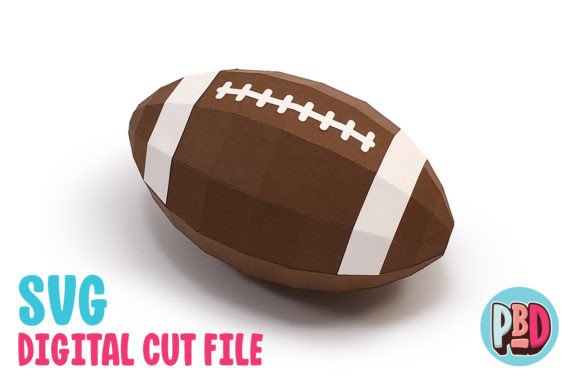
American Football 3D Papercraft
As a designer who spends more time staring at stitch density charts and fabric swatches than watching the actual game, I approach every new digital asset with a healthy dose of skepticism. The market is flooded with generic sports imagery, so finding a design that bridges the gap between playful craft and professional embroidery application is rare. That is why I decided to put American Football 3D Papercraft through its paces. While the product description labels this as a "Shapes" category item and identifies it as a "3D SVG" intended for cardstock construction, my review focuses on how this visual concept translates when adapted for textile work, specifically machine embroidery.
The core appeal of American Football 3D Papercraft lies in its geometric interpretation of a classic icon. It isn’t just a flat oval; it suggests volume, layers, and structural integrity. For an embroiderer, this is crucial. A design that implies three-dimensionality often reads better on fabric because the texture of the thread can mimic the shadows and highlights inherent in a papercraft aesthetic. My first impression was one of clean lines and bold geometry. It feels modern, slightly retro, and undeniably sporty without being overly aggressive or cluttered with unnecessary details like laces or team logos unless specifically added.
Real-World Application: From Screen to Stitch
I recently had a client request a custom gift set for a father who is also a die-hard football fan. He runs a small local business and loves handmade, personalized items. We needed something that could be applied to multiple products: a heavy-duty canvas tote bag, a fleece sweatshirt, and perhaps a smaller embroidered patch for a cap. This is where American Football 3D Papercraft proved its versatility.
When digitizing or selecting a file based on this concept, the layout is forgiving. The central shape allows for easy placement on chest areas, center fronts of bags, and even the curved panels of caps. In our mockup phase, we tested it on a dark charcoal heather sweatshirt. The contrast was immediate. Because the design relies on strong outlines and distinct sections (simulating folded paper), it holds up well against textured fabrics. It doesn’t get lost in the weave like a highly detailed realistic photograph might.
For the tote bag, we treated the design almost like an appliqué base. Even if executed purely in thread, the suggestion of layered shapes works beautifully. We used a combination of satin stitches for the outer contours to give it that crisp, finished edge, and fill stitches for the inner segments. The result looked less like a cheap novelty print and more like a boutique brand logo. Customers at craft fairs often gravitate toward designs that look intentional and structured. This design delivers that sense of professionalism.
Technical Considerations for Embroidery Designers
While the visual potential is high, there are practical hurdles any experienced maker must consider before committing to production. First, let’s address the medium. The original instructions specify building this from medium cardstock. When translating this into a machine embroidery design, you must adapt the structural elements into stitch types. You cannot simply replicate paper folds with thread; you have to imply them.
Stitch Density and Hoop Size
This design works best in medium to large hoop sizes. Trying to shrink it down too small risks losing the "papercraft" distinction, turning it into a blurry blob. If you attempt to use this on a tiny baby onesie or a delicate tea towel, the stitch density required to define the edges might overwhelm the fabric. Always test the hoop size relative to your final garment. For a standard adult t-shirt or sweatshirt, the proportions are ideal. For smaller items, consider simplifying the design by removing internal fill stitches and relying solely on outline work.
Fabric and Stabilizer Selection
Because the design implies weight and structure, it pairs naturally with heavier fabrics. Canvas, denim, felt, and thick cotton blends provide the necessary support for the threads. If you try to embroider this on a thin, stretchy jersey knit without proper stabilization, the "3D" effect will distort. The tension will pull the fabric, warping the geometric angles. Use a cut-away stabilizer for garments that will be worn frequently, especially if they go through commercial washing machines. For temporary projects or lightweight fabrics, a tear-away might suffice, but stability is key to maintaining the sharp corners characteristic of the papercraft style.
Color Strategy and Visual Impact
One of the strongest assets of American Football 3D Papercraft is its adaptability to color palettes. Traditional brown leather tones are obvious, but the geometric nature allows for creative freedom. I recommend testing the design in black and white mockups first. If the shapes read clearly in grayscale, they will likely succeed in color. This helps identify if the contrast between different stitch areas is sufficient.
For a personalized gift, consider using metallic threads for the outer borders to enhance the "premium" feel, while keeping the inner fills in matte cotton polyester. This mimics the way light hits real paper crafts. For holiday embroidery themes, swapping the traditional colors for red, green, and gold can transform this sports motif into a festive decor piece suitable for kitchen towels or pillow covers. The design’s neutrality regarding specific teams makes it a safe choice for commercial embroidery businesses looking to sell generic merchandise on Etsy or at pop-up shops.
Where to Exercise Caution
Not every surface is created equal. Avoid placing this design on highly textured fabrics like bouclé or chunky knits, as the intricate details will be obscured. Similarly, be cautious with dark fabric if your digitization does not include a dense underlay; the thread may sink into the fabric, losing definition. Curved surfaces like baseball caps require careful hooping to prevent distortion. If the design includes tiny lettering or very fine decorative accents, ensure those elements are large enough to survive the stitching process. Small text often becomes illegible after washing.
Furthermore, remember that this is originally a 3D SVG for cutting. If you are using a Cricut or Silhouette to create a vinyl version alongside your embroidery line, ensure the registration marks align if you plan to combine methods. However, for pure embroidery, focus on the two-dimensional translation of these 3D forms.
Final Verdict for Craft Business Owners
Does American Football 3D Papercraft earn a spot in your library? Yes, particularly for makers focused on home decor, casual apparel, and gift items. It strikes a balance between fun and sophisticated. It avoids the cliché of pixelated sports graphics while offering enough thematic recognition to appeal to fans.
Before listing this as a small shop product, I strongly advise creating printable mockups. Show the design on a tote bag, a hoodie, and a nursery wall art frame (if printed). This helps customers visualize the end result. Also, double-check your licensing agreements. Ensure you have the right to sell finished goods made from this design. Many digital assets allow personal use but restrict commercial distribution.
In summary, American Football 3D Papercraft is a versatile, visually striking option for designers looking to add a touch of geometric flair to their sports-themed collections. With the right fabric choices and attention to stitch detail, it can elevate a simple project into a desirable, high-quality handmade product.