3D Doll House Miniature Furniture Bundle: Laser Cutting for Other Toys Amp
As a brand designer who spends most of my days refining visual identities for local boutiques and artisanal food brands, I am constantly evaluating new graphic design asset libraries. When I first encountered the 3D Doll House Miniature Furniture Bundle, my initial reaction was one of cautious curiosity. In the world of small business branding, novelty often competes with professionalism. However, upon closer inspection, this collection offers something far more substantial than mere decoration; it provides a versatile toolkit for creating tactile, immersive brand experiences.
The mood created by these assets is distinctly playful yet structured. They suggest a brand personality that is friendly, handmade, and deeply attentive to detail. Whether you are running a boutique children’s product line, a whimsical home decor shop, or a creative craft studio, this bundle fits seamlessly into a narrative that values craftsmanship. It feels organic rather than corporate, making it an ideal choice for businesses that want to establish an immediate emotional connection with their customers through visual storytelling.
From Digital Files to Tangible Brand Touchpoints
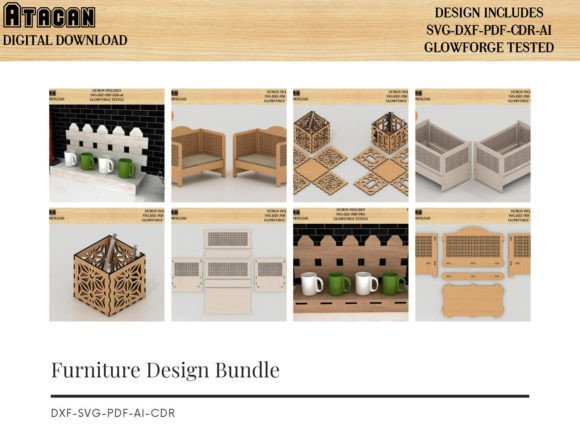
One of the most compelling aspects of this resource is its technical adaptability. These are designed to fit glowforge laser machines but can be used with all laser machines. Tested using a Glowforge Pro. These files are ideal for machines using SVG-DXF-PDF-AI-CDR files. You can use this versatility to bridge the gap between digital marketing and physical product presentation. For a local business owner, this means you are not just buying images; you are acquiring production-ready templates for physical goods.
Imagine a local bakery launching a new line of artisanal cookies. Instead of standard paper packaging, they could utilize these miniature furniture designs as decorative accents on custom boxes or hang tags. The ability to cut these directly from the provided vector files ensures precision, allowing for a premium feel that elevates the perceived value of the product. This approach transforms simple product labels into memorable keepsakes, encouraging customers to retain the packaging long after the contents are consumed.
Furthermore, these assets support a wide array of promotional materials. A handmade soap maker might use the intricate details of the furniture bundles to create unique stamping plates or embossing tools. A florist could incorporate these shapes into their delivery cards or window displays. By integrating such specific design elements, businesses achieve stronger first impressions and better product recognition. The visual hierarchy becomes clearer when decorative elements frame essential information like logos and prices, guiding the customer’s eye naturally across the page.
Elevating Presentation and Customer Trust
In today’s market, aesthetic consistency is a key driver of consumer trust. When a business presents itself with polished, cohesive visuals, it signals reliability and attention to quality. The 3D Doll House Miniature Furniture Bundle aids in building this professional branding by providing a consistent visual language across different platforms. Whether used in social media graphics, website banners, or printed flyers, these elements help maintain a unified brand identity.
Consider a seasonal campaign for a candle brand. During the holidays, incorporating miniature furniture motifs can evoke feelings of nostalgia and comfort. These marketing visuals become more than just advertisements; they become part of the customer’s lifestyle narrative. Improved customer trust follows naturally when the visual experience matches the quality of the product inside. Better shelf appeal is achieved when packaging stands out not just through color, but through texture and unique graphic composition.
This asset also supports editorial design and web design projects. For instance, a creative entrepreneur selling digital planners might use these illustrations to create engaging cover art or section dividers. The design assets can be layered and manipulated to create depth, adding a three-dimensional quality to flat screens. This enhances the overall user experience and makes digital interactions feel more tangible and inviting.
Strategic Placement and Creative Applications
To maximize the impact of these assets, strategic placement is crucial. They work best as product labels, packaging accents, hero graphics, and decorative brand elements. Using them as promotional banners or in product mockups can significantly boost engagement. For example, a thank-you card included in a shipment can feature a subtle outline of a miniature chair or table, reinforcing the brand’s theme without overwhelming the message.
However, there are contexts where caution is advised. Formal corporate branding rarely benefits from such playful imagery. Similarly, very small labels or crowded product packaging may suffer if the details of the furniture become illegible. Ingredient-heavy layouts and legal information areas should remain clean and uncluttered to ensure compliance and readability. Low-contrast backgrounds can cause these intricate designs to disappear, while luxury minimalist brands might find the style too ornate for their aesthetic. In any design where the decoration competes with important text, simplicity should prevail.
Practical Notes for the Discerning Designer
Before integrating these assets into a client project or personal business, several practical steps must be taken. First, test the design on real packaging mockups. Seeing how the laser-cut version interacts with different materials—cardboard, acrylic, wood—provides insight into its final appearance. Check black and white usage to ensure the design holds up without color reliance. Previewing it on small labels is essential to verify that fine details do not get lost in reproduction.
It is also wise to test the asset with your specific brand colors. Compare it with competitor packaging to ensure your visual identity remains distinct. Reviewing PNG transparency and inspecting SVG or vector editability when relevant allows for greater flexibility in layout adjustments. Furthermore, consider how the illustration pairs with typography. Test it beside serif font, sans serif font, script font, handwritten font, and display font styles to find the perfect typographic harmony.
Finally, confirm commercial licensing before using it for client work, business branding, or physical product sales. Understanding the terms of use protects your business from legal issues and ensures ethical use of creative marketplace resources. Whether you are looking to enhance your packaging design, create engaging social media graphics, or develop a comprehensive brand identity, the 3D Doll House Miniature Furniture Bundle offers a robust foundation for creative expression. By approaching its application with strategic intent and technical diligence, local business owners can leverage these assets to create professional, trustworthy, and visually stunning brand experiences.